

If you play sport regularly, you probably know that small aches and niggles can sometimes be part of training. A sore muscle after a hard session isn’t unusual.
The problem is when that discomfort keeps coming back, changes the way you move or eventually stops you from doing the activity you enjoy.
This is where a sports chiropractor may be able to help.
Sports chiropractic isn’t just about treating an injury after it happens. A good approach also looks at how you move, what you’re asking your body to do and whether there are factors that may be increasing your risk of getting hurt again.
What Does a Sports Chiropractor Do?
A sports chiropractor works with people who are physically active, from recreational runners and gym-goers to competitive athletes.
During an assessment, they may look at how your joints and muscles move, your strength and flexibility, your training routine and the movements involved in your sport.
For example, a runner with recurring knee discomfort may need more than simply looking at the knee itself. The way the hip, ankle and rest of the leg move may also be relevant.
Similarly, an athlete experiencing shoulder pain may need an assessment of the shoulder, upper back and surrounding movement patterns.
The aim is to understand the bigger picture rather than focusing only on where it hurts.
Common Sports Injuries
Sports injuries can happen in many different ways.
Some develop suddenly, such as a sprain or strain during a game. Others build gradually as a result of repetitive training, changes in workload or insufficient recovery.
Some common problems athletes experience include:
- Back and neck pain
- Shoulder pain
- Knee pain
- Ankle and foot problems
- Muscle strains
- Joint stiffness
- Overuse injuries
- Repetitive strain problems
Not every injury requires chiropractic treatment. The first step should always be an appropriate assessment to determine what may be happening and whether chiropractic care is suitable.
How Chiropractic Care May Help
Chiropractic care may form part of a broader approach to managing some musculoskeletal sports injuries.
Depending on your individual situation, care may involve hands-on treatment, movement advice and recommendations around activity or training.
The purpose isn’t simply to make a painful area feel better temporarily. Your chiropractor may also look at whether certain movements, training habits or physical limitations are contributing to your symptoms.
For an athlete, this can be particularly useful because simply stopping all activity isn’t always the practical answer.
The goal is to understand what your body is currently able to tolerate and work towards returning to your usual activities appropriately.
Injury Prevention and Management
Injury prevention and management are important parts of looking after your body when you’re training regularly.
Prevention doesn’t mean you can guarantee that you’ll never get injured. Sport involves physical demands, and accidents can happen.
Instead, prevention is about identifying factors that may increase your risk.
This could include suddenly increasing your running distance, adding too much weight to your gym programme, changing your training surface or returning to sport too quickly after an injury.
Your recovery matters too.
Training hard every day without allowing enough time for your body to recover can leave you feeling run down and may affect how well you move.
A sports chiropractor can discuss these factors with you and help you understand how they relate to your symptoms and movement.
What About Recurring Injuries?
One of the most frustrating experiences for an athlete is getting the same injury repeatedly.
You rest for a while. The pain settles. You return to training. Then, a few weeks later, the same problem appears again.
When this happens, it can be useful to look beyond the immediate symptoms.
Has your training volume changed?
Are you doing a different type of exercise?
Have you returned to full training too quickly?
Are you compensating for another injury?
Are you repeatedly performing a movement that your body isn’t currently tolerating well?
These questions don’t necessarily identify the cause on their own, but they can help guide an appropriate assessment.
Sports Chiropractor for Runners
Running is a good example of how repetitive movement can place demands on the body.
A runner may develop pain around the knee, hip, ankle, foot or lower back. Sometimes the symptoms appear after increasing mileage or introducing hills, speed work or a different training programme.
A sports chiropractor can assess relevant areas of movement and discuss your training routine.
This doesn’t mean every running injury should be treated by a chiropractor. Some conditions require assessment by a GP, physiotherapist, sports physician or another healthcare professional.
Knowing when to refer is an important part of good injury management.
Getting Back to Sport After an Injury
Returning to sport can be harder than initially getting injured.
You may feel better after a period of rest, but that doesn’t always mean you’re ready to immediately return to your previous training level.
A gradual return can give your body time to adjust to increasing demands.
Your return-to-sport plan will depend on the injury, your symptoms and the type of activity you want to return to.
If pain returns or your movement changes as you increase your workload, that’s useful information rather than something to simply push through.
When Should You See a Sports Chiropractor?
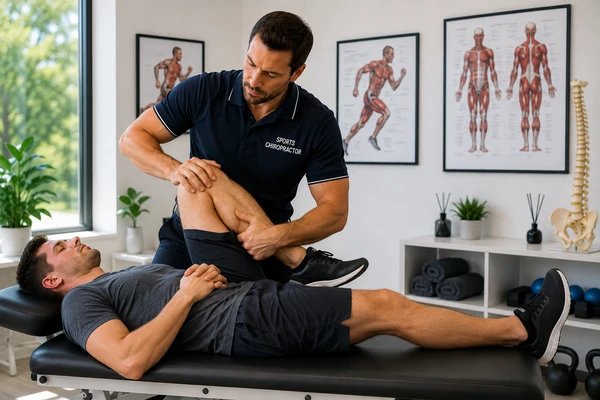
Consider having an injury assessed if pain is persistent, keeps returning or is affecting your ability to train normally.
It’s also worth seeking professional advice if you notice that you’re changing the way you move because of pain or you’re repeatedly experiencing the same problem.
If an injury is severe, follows significant trauma or involves symptoms such as major swelling, inability to bear weight, severe weakness or other concerning symptoms, seek appropriate medical assessment promptly.
A sports chiropractor should be part of a wider healthcare team when your situation requires it.
The Bottom Line
Sports injuries aren’t always caused by one thing.
Training load, movement, recovery, previous injuries and the demands of your particular sport can all play a role.
A sports chiropractor can assess your movement and symptoms and, where appropriate, include chiropractic care as part of your injury management.
Most importantly, don’t feel that you have to ignore recurring pain simply because you’re used to training through discomfort. Getting the problem assessed can help you understand what’s happening and make more informed decisions about your training and recovery.