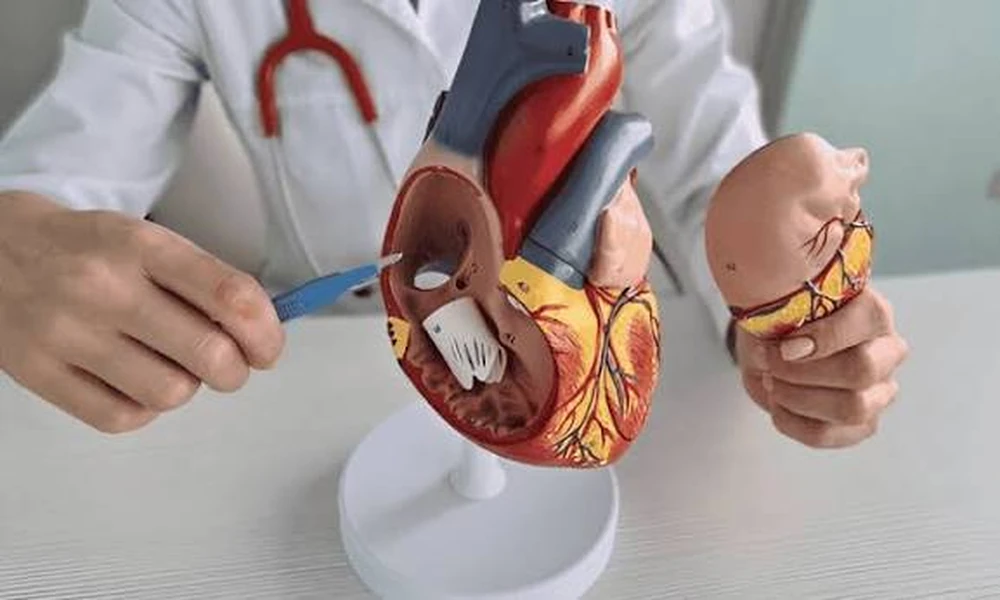
If your heart valve needs replacing, your surgeon or cardiologist will ask you to choose between two families of artificial valve: a mechanical valve made of carbon and metal, or a tissue valve made from treated animal tissue (usually cow pericardium or pig valve) mounted on a frame. There is no universally right answer. Each choice trades one set of advantages for another, and the right one depends on your age, lifestyle, other illnesses and what you are prepared to live with. This guide lays out the trade-offs so that the conversation with your doctor is an informed one.
The two options in brief
Mechanical valves are extremely durable and can last a lifetime. Their drawback is that blood tends to clot on them, so patients need lifelong anticoagulation with warfarin and regular INR blood tests.
A tissue valve replacement uses a bioprosthetic valve that does not usually require lifelong warfarin, but the tissue wears out over time and the valve may need replacing again.
Durability: how long does each last?
- Mechanical valves rarely fail structurally; the main long-term risks are clotting and bleeding related to anticoagulation.
- Tissue valves typically last around 10-15 years, sometimes longer in older patients. They wear out faster in younger people, in patients with kidney disease and in the mitral position compared with the aortic position. Newer tissue-treatment technologies aim to slow this, but long-term data are still accumulating.
So a 40-year-old receiving a tissue valve should expect at least one more intervention in their lifetime; a 75-year-old often will not.
Blood thinners: the daily reality
With a mechanical valve, warfarin is for life. That means:
- A blood test (INR) every two to four weeks once stable, more often at first
- Attention to diet (green leafy vegetables and some foods affect warfarin), alcohol and interacting medicines
- Higher bleeding risk, which matters for people with a history of ulcers, falls, or who play contact sports
- Careful planning around any surgery, dental work or pregnancy, since warfarin can harm an unborn baby
- A need to reach a laboratory regularly, which is a practical issue in some parts of India
With a tissue valve, most patients take warfarin or an antiplatelet for only about three months, after which aspirin alone is usual, unless they have another reason for anticoagulation such as atrial fibrillation. The practicalities are covered in the blood thinners after valve replacement guide.
Age: the usual starting point
Guidelines broadly suggest:
| Age | Usual leaning | Reason |
|---|---|---|
| Under 50 | Mechanical | Tissue valves wear out quickly in younger patients; many reoperations avoided |
| 50-65 | Either; shared decision | Trade-off between reoperation risk and lifelong warfarin is finely balanced |
| Over 65 | Tissue | Valve likely to outlast the patient; avoids bleeding risk of warfarin in older age |
These are tendencies, not rules. A 45-year-old woman planning pregnancy, a 55-year-old farmer far from a laboratory, or a 70-year-old who already takes warfarin for atrial fibrillation may each be advised differently.
Valve-in-valve TAVI: the option that has changed the calculation
One reason tissue valves are now chosen at younger ages than before is that when a surgical tissue valve wears out, it can often be treated without reopening the chest. A new transcatheter valve is expanded inside the old one, a procedure called valve-in-valve TAVI. It is explained in the valve-in-valve TAVI for a failing tissue heart valve article on the Heart Valve Experts site.
Two cautions apply. First, valve-in-valve works best when the original valve was large enough; a small first valve leaves little room, so the sizing decision at the first operation matters. Second, it is not guaranteed to be suitable for everyone later, and it is expensive, so it should be seen as a likely option rather than a certainty.
Cost considerations
As an approximate guide, surgical valve replacement in Indian private hospitals is commonly quoted in the region of ₹3-8 lakh regardless of valve type, with the valve itself a significant part of that. Mechanical valves are generally cheaper to buy; imported tissue valves cost more. Over a lifetime, however, a mechanical valve carries the ongoing cost of warfarin and INR testing, while a tissue valve carries the possible cost of a future reintervention. These figures are indicative, vary by hospital and city, and the exact amount comes from your treating team.
Questions to ask your cardiologist and surgeon
- Given my age and health, which valve do you lean towards, and why?
- If I choose tissue, how large a valve can be implanted, and would valve-in-valve be feasible later?
- If I choose mechanical, how will my INR be monitored where I live? Is home testing an option?
- Do I have other conditions (atrial fibrillation, kidney disease, bleeding history) that tip the balance?
- Am I planning pregnancy, contact sport or work that makes bleeding risk unacceptable?
- What is the plan if the valve fails or complications occur?
When to seek urgent care
After any valve replacement, seek emergency help for sudden breathlessness, chest pain, fainting, signs of stroke (weakness, speech difficulty), unusual bleeding, black stools or high fever. Patients on warfarin should report any head injury promptly.
Summary
A mechanical valve buys durability at the price of lifelong warfarin; a tissue valve replacement buys freedom from anticoagulation at the price of a likely future intervention, which may now be done by catheter. Decide with your cardiologist and surgeon, not on price or hearsay, and make sure the practicalities of monitoring and follow-up fit your life.
Disclaimer: This article is for general information only and is not a substitute for medical advice. Please consult a qualified cardiologist or cardiac surgeon about which valve type is right for you.